

 Chloe Parker
If you work in cross-border e-commerce, overseas social media operations, or market data collection, the term “USA residential IP” needs no introduction. Whether it’s an Amazon storefront, a TikTok US account, or price monitoring aimed at American consumers, a clean and stable USA residential IP is often the infrastructure that determines whether your business can run for the long haul.
But the residential IP market is uneven: two products both labeled “residential IP” may be genuine home broadband — or a datacenter IP in disguise. With the same budget, the right purchase runs smoothly for a year; the wrong one can put your account offline within days. This guide explains it all: what a residential IP is, how to buy a USA residential IP, how to read static residential IP prices, how to verify a clean US IP — plus the providers worth shortlisting in 2026.
A residential IP (one of many residential IP addresses assigned by internet service providers) is an IP address allocated by an ISP to a real household broadband user. Unlike mass-produced datacenter IPs, a residential IP is registered as “home broadband” in IP databases, so target websites treat it as an ordinary, genuine user.
Residential IPs fall into three main categories:
Once you understand these three, “USA residential IP” is easy to define: a residential IP address located in the United States and registered under American carriers such as Comcast, AT&T, or Verizon.
Among all residential IP locations, US IPs carry the highest demand and commercial value, for very practical reasons:
In short: if you do business in the US market, a USA residential IP is not optional — it’s standard equipment.
Let’s break the buying decision into the questions buyers ask most.
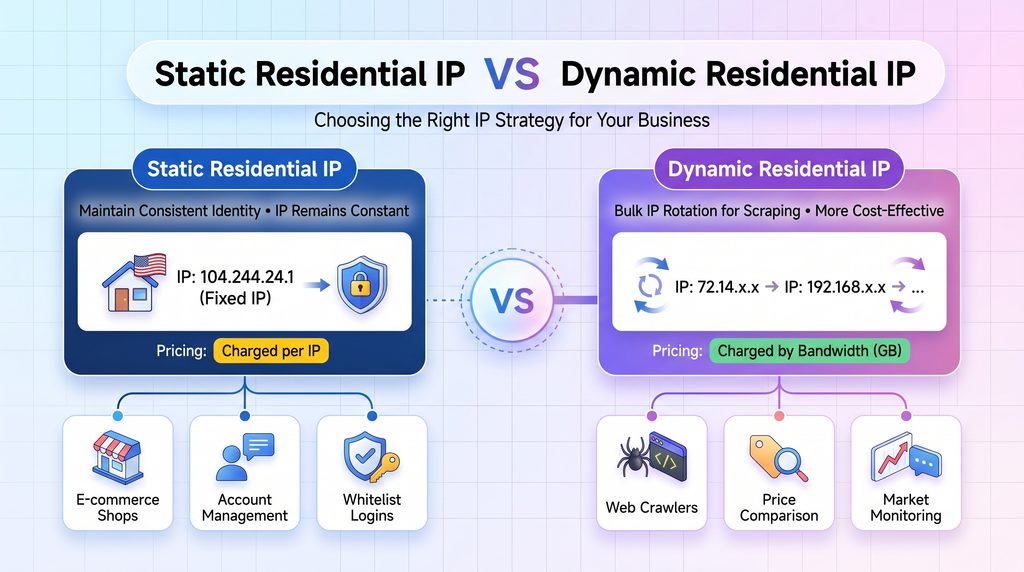
A dedicated residential IP is assigned to you alone — its history and reputation are determined entirely by your own behavior. Shared IPs are cheaper, but another user’s poor track record can drag your account down with it. For e-commerce stores and social accounts involving financial transactions, a dedicated static residential IP is the simpler and safer choice.
“Clean” means the IP has no abusive usage history and isn’t flagged in risk-control databases. Verification is straightforward:
A reputable provider’s US static residential IPs should pass all three checks.
Pricing is one of buyers’ top concerns. Based on 2026 market rates, here are the typical price ranges for USA residential IPs:
| Type | Billing model | Typical price range | Best for |
| Shared static residential IP | Per IP / month | $0.25–0.50/IP | Testing, low-risk tasks |
| Dedicated static residential IP | Per IP / month | $1.30–3.50/IP | Accounts, stores, long-term business |
| Rotating residential IP | Per GB | $0.58–3.00/GB | Data collection, bulk crawling |
| Short-term residential IP | Per IP / use | $0.03–0.10/IP | Registration verification, one-off tasks |
A cheap residential IP isn’t necessarily a bad buy — but recognize the pattern: the lowest price tiers are almost always shared IPs. If you plan to operate the same account safely and stably over time, the $2–3 monthly premium for a dedicated static IP is far cheaper than the cost of a compromised account.
Based on current pricing pages, third-party testing, and market reputation, these providers deserve a place on your USA residential IP shortlist. Prices change frequently — always check official sites before buying.
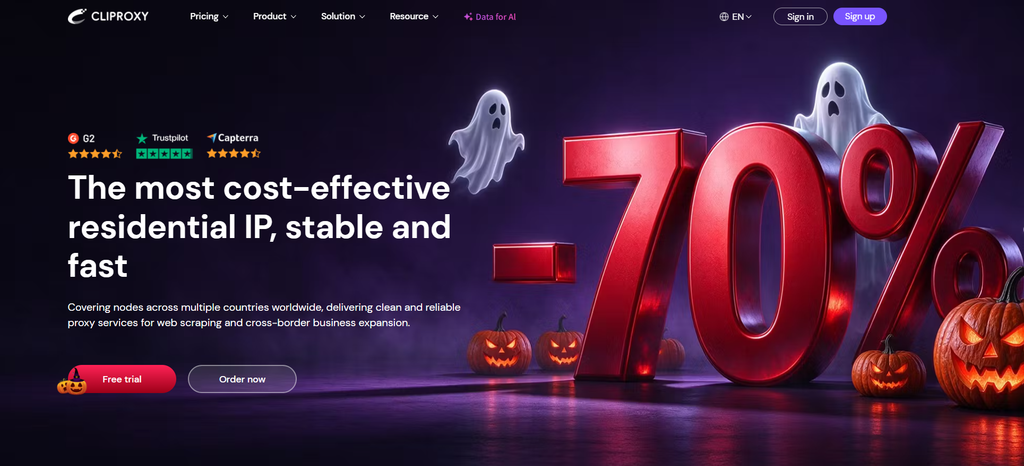
CliProxy operates a global pool of 100M+ residential IPs with rich US coverage, and billing that spans every mainstream model: dedicated static residential (ISP) IPs from $3/IP/month with unlimited bandwidth, rotating residential from $0.58/GB with traffic that never expires, short-term residential IPs from $0.04/IP, plus unlimited port- and bandwidth-based plans for high-concurrency tasks. All static IPs are 100% dedicated, their genuine US ISP origin can be verified via IPinfo, and third-party tests report low risk scores.
HTTP/HTTPS/SOCKS5 and API access are supported, with ready-made integrations for antidetect browsers including Kameleo, GoLogin, Octo Browser, and Dolphin Anty. New users can apply for a free trial, and if the product doesn’t meet your expectations, online support is easy to reach.
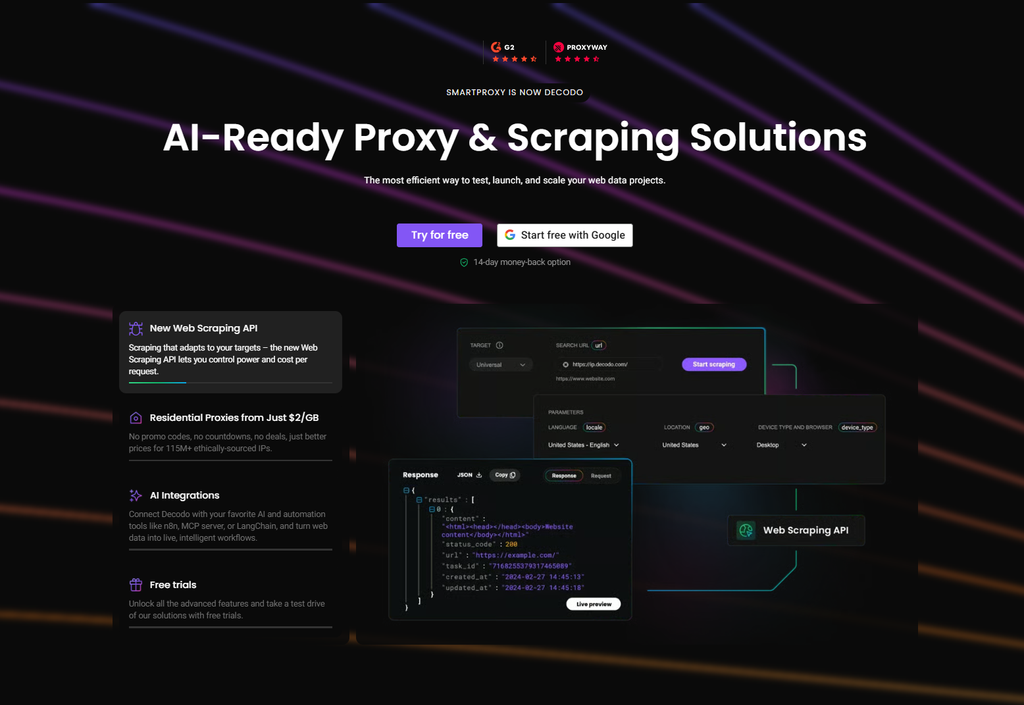
Well-balanced infrastructure with sub-0.2s average response times and 99.99% uptime. US static residential IPs start around $3.33/IP, dropping to ~$0.27/IP at bulk volume, with both per-IP and per-GB billing available.
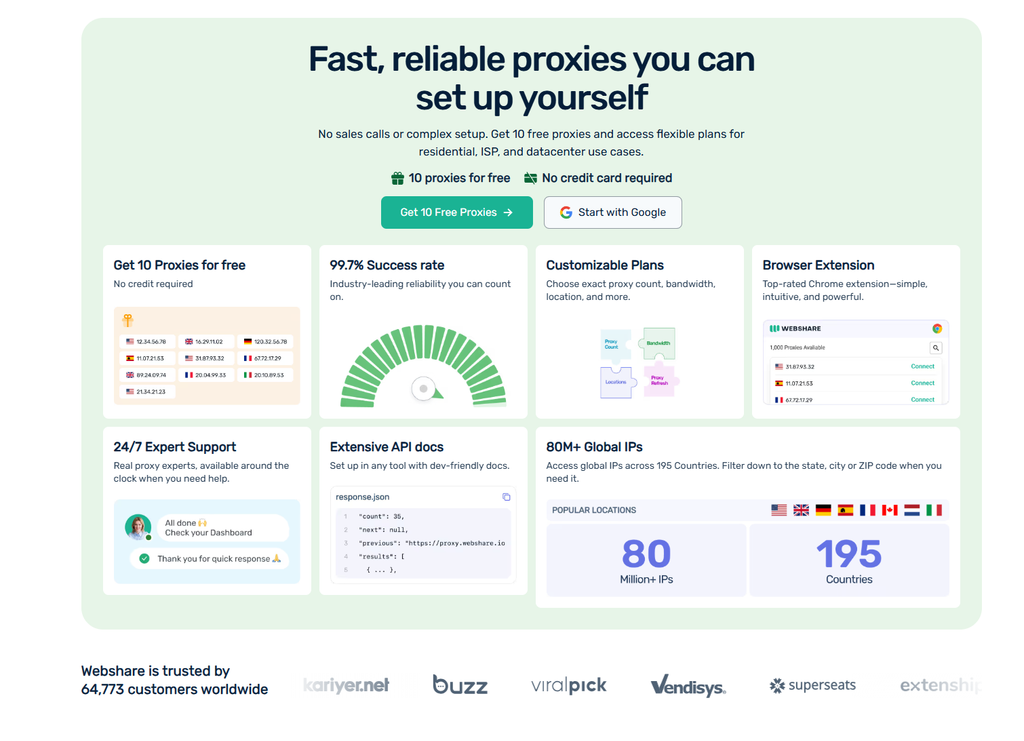
The industry’s lowest entry barrier: shared static residential from ~$0.23/IP, dedicated from ~$1.47/IP. A permanent free tier (10 proxies) is ideal for testing US routes before you commit.
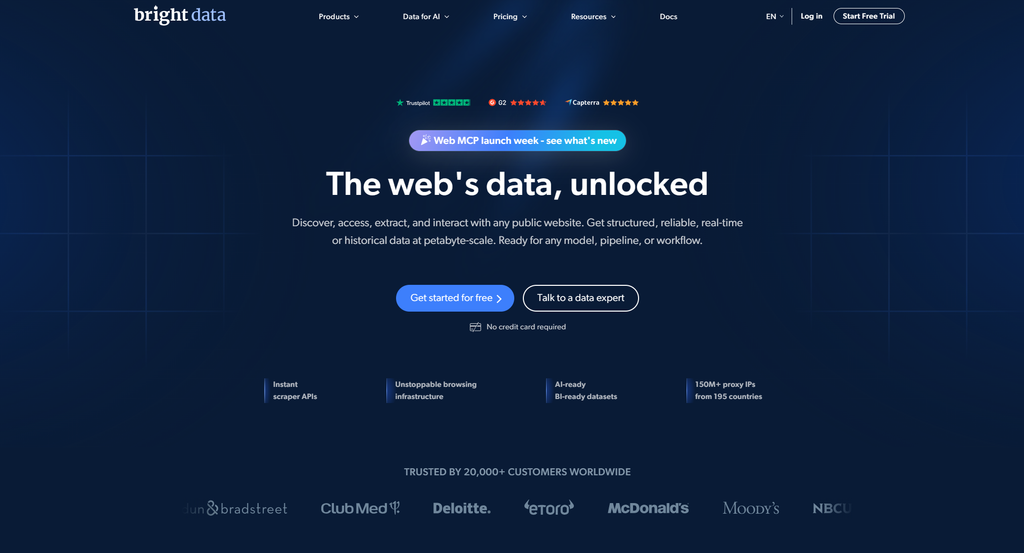
One of the largest ISP IP networks, with five-level targeting for US static residential IPs across state, city, ZIP code, carrier, and ASN. Shared from ~$1.30/IP, dedicated from ~$3.20/IP — well suited to enterprise teams with compliance requirements.
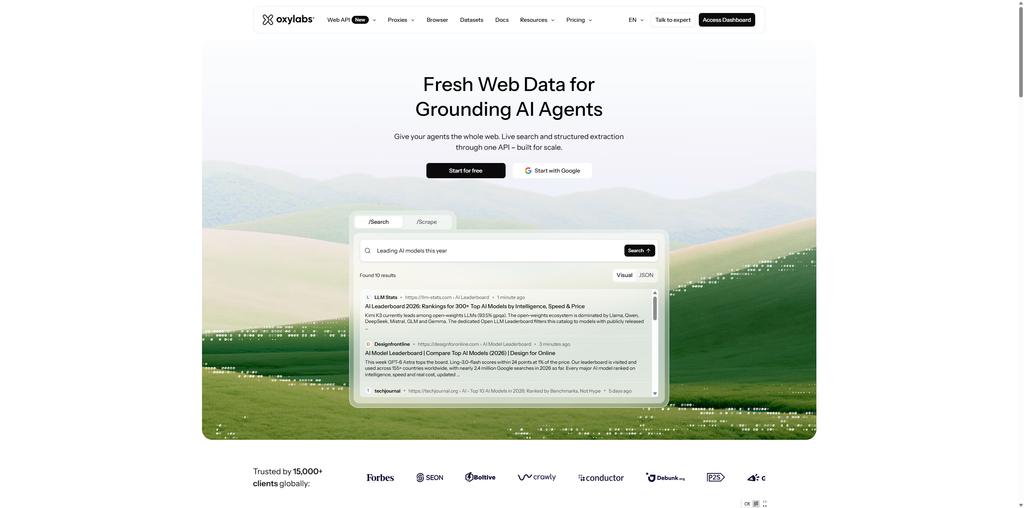
Dedicated ISP IPs with full ASN selection — you can specify registration under tier-1 US carriers like Comcast or AT&T. From ~$1.60/IP, with unlimited bandwidth under a fair-use policy.
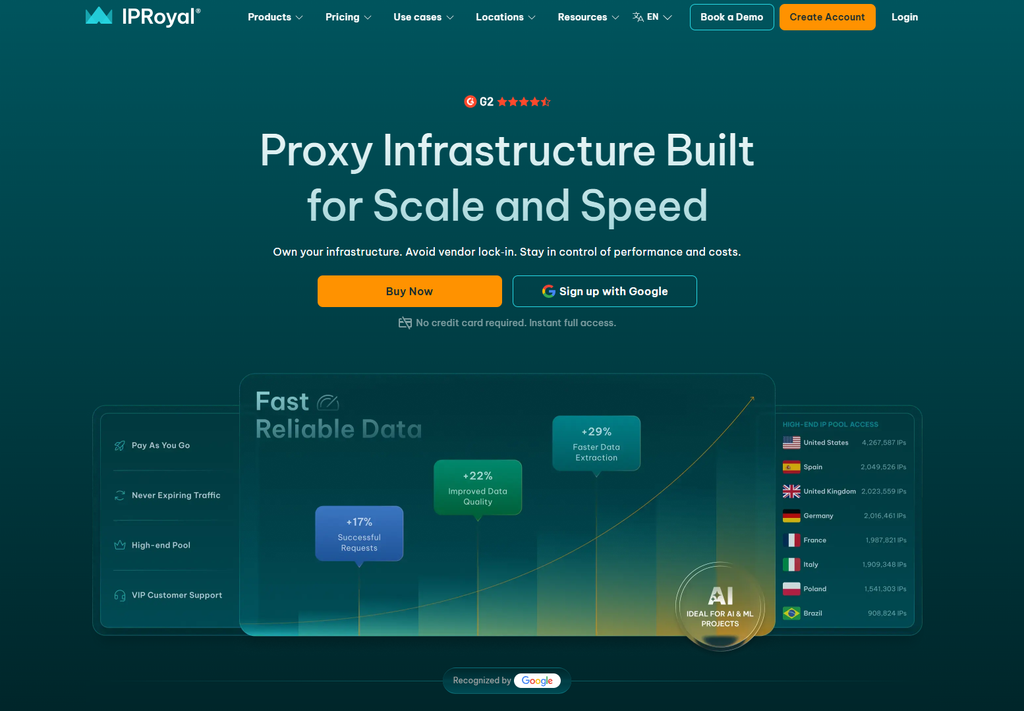
US static residential IPs at roughly $2.00–2.40/IP, 100% dedicated with unlimited bandwidth and no contracts — buy a single IP for a week and decide whether to scale after testing.
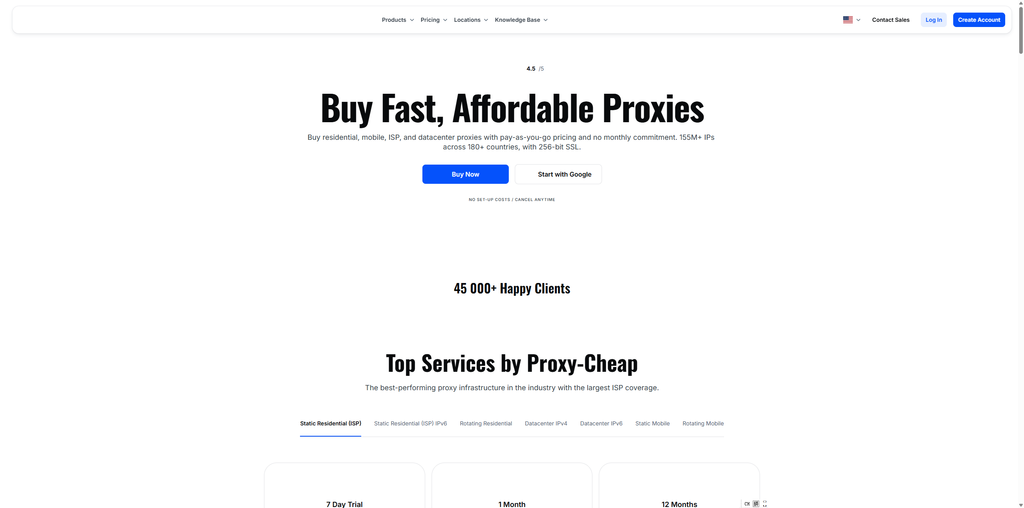
Dedicated static residential at roughly $1.27–3.39/IP depending on the plan, unlimited bandwidth, HTTP/HTTPS/SOCKS5 support, and a 7-day trial at ~$1.99.
A side note: if your business later expands into Southeast Asia, region-specific resources such as Malaysian residential IPs are available from the same global-pool providers like CliProxy — no need to find another vendor.
The United States is one of the strictest internet markets when it comes to IP scrutiny — mainstream platforms evaluate IP type, ASN ownership, geographic consistency, and historical reputation together. That’s exactly why “USA residential IP” exists as a standalone search category. Each of the four scenarios below follows logic specific to the US market.
Amazon US holds seller accounts to extremely high standards of environmental consistency: registration location, login IP, payment information, and device fingerprint together form the account’s “identity profile.” A US storefront that keeps hopping between different countries and IP types can easily trigger security reviews or secondary verification. The standard practice among mature sellers is “one store, one IP”: bind each store to a dedicated US static residential IP, so the platform always sees a “local seller” on Comcast or AT&T home broadband. The logic is similar for eBay, Etsy, and Walmart seller centers — and these platforms are even less tolerant of datacenter IPs.
Content distribution, livestream permissions, and Shop features on TikTok US are all tightly bound to the account’s region. When operating US accounts, the IP must not only be “in America” but remain stable in the same metro area over time — bouncing from Los Angeles today to New York tomorrow doesn’t resemble real user behavior at all. For teams running account matrices, the value of a US static residential IP isn’t that it “works” — it’s that dozens or hundreds of accounts each get a long-term, mutually independent “home network identity.”
Streaming catalogs, airfares, hotel rates, and e-commerce pricing in the US commonly follow regional differentiation strategies — the same product may be shown at different prices to a US household user versus an overseas visitor. Market research firms, price-comparison services, and corporate procurement teams need US residential IPs to obtain genuine quotes as local consumers; education and travel professionals also use them to verify how pages render for American users. These scenarios are light on traffic but demand a trustworthy identity — per-IP static residential pricing keeps costs predictable.
Google’s results are heavily localized: the same keyword searched on home broadband in Texas and on a datacenter route in Singapore returns two different sets of results. SEO teams targeting the US market need to pull real ranking data, Local Pack results, and “People Also Ask” content from a genuine US residential network environment every day — data collected through any non-US or non-residential IP carries distortion. Using the same US residential IP for daily monitoring also keeps historical data comparable.
Buying a USA residential IP really means buying three things: genuine ISP ownership, a clean IP history, and controllable cost.
Weighing price, resource scale, and flexibility together, CliProxy — with dedicated static residential IPs at $3/IP/month and traffic plans that never expire — is the pick worth testing first for USA residential IP procurement in 2026.
The prices cited in this article were verified against provider pricing pages in October 2026. Pricing changes frequently — always refer to official websites for the latest information.
Start your Cliproxy trial

Chloe Parker 2025-09-05 · 10 min read

Chloe Parker 2025-03-23 · 10 min read

Chloe Parker 2025-07-09 · 9 min read