


 Benjamin Carter
Over the past few years, AI’s role in e‑commerce has undergone a fundamental shift — from a nice‑to‑have auxiliary tool to a tangible growth engine. Statistics speak volumes: during the 2025 holiday season, generative AI drove a 693% year‑on‑year surge in referral traffic to retail websites, and traffic from this source boasted a conversion rate 31% higher than other channels. Personalized recommendations, one of the most mature AI applications, already account for 25%‑35% of total e‑commerce revenue, with leading businesses achieving revenue growth of up to 40% through this capability.
Notably, AI dividends are not evenly distributed across industries. Certain categories are inherently well‑suited for AI capabilities and have delivered impressive revenue results at an early stage. This article breaks down which e‑commerce workflows AI boosts, and which product categories are reaping tangible financial benefits.
This is the most direct revenue‑generating use case for AI. Data indicates that users who click on AI‑powered recommendations are 4.5 times more likely to make a purchase, and recommendation slots can lift average order value (AOV) by as much as 369%. Amazon’s recommendation engine contributes roughly 35% of its total sales and is widely regarded as an industry benchmark. User browsing, click‑through and purchase records are collected and stored. AI analyzes cached data to identify consumer preferences and buying habits, then delivers personalized recommendations combined with product metadata.
Apparel, footwear and accessories involve complex consultation scenarios, with frequent inquiries over size selection, fabric properties, styling suggestions and return‑exchange policies. AI customer service goes far beyond simple labor‑cost reduction; it undertakes pre‑sales guidance, cart‑recovery and conversion‑driving functions. An analysis of 17 million conversation sessions shows that conversion rates reach 12.3% with AI‑powered shopping assistance, compared to merely 3.1% without AI support — nearly a four‑fold difference in performance. Proactive AI conversations triggered by user behavior can also recover 35% of abandoned shopping carts.
AI‑generated product visuals, detail‑page copy and marketing copy drastically cut content costs and accelerate product launch cycles. The effect is especially pronounced for visually‑driven categories. Merchants can leverage AIGC to batch‑produce product graphics, marketing copy and short‑video assets, greatly reducing costs for photoshoots, image retouching and scriptwriting while speeding up new‑product rollouts. AI virtual try‑on further addresses a critical pain point of online shopping: shoppers can preview how garments fit their body shapes without physical products, narrowing the expectation‑reality gap between marketing photos and real‑world wear and helping lower return rates.
AI is no longer merely a post‑hoc reporting tool; it serves as a starting point for business decision‑making. UR adopted AI for full‑lifecycle product management and achieved notable improvements in sell‑through rates for inventory allocation. Peacebird leverages AI to shorten style validation cycles and optimize replenishment and stock allocation, mitigating the long‑standing apparel‑industry dilemma of hot‑item stockouts and slow‑moving inventory overstock. Front‑end intelligent advertising cuts traffic waste and lifts GMV, while back‑end supply‑chain AI reduces inventory losses. Combined, these two dimensions drive improved profitability.

Fashion represents one of the fastest‑monetizing categories for AI. On one hand, AI virtual try‑on and smart‑size recommendations directly mitigate the industry’s biggest pain point: high return rates. On the other hand, AI‑driven styling recommendations significantly raise cross‑sell rates. A standout private‑domain case comes from European fashion retailer Ivet (48,000 SKUs). After deploying AI‑optimized value‑based recommendations, its conversion rate multiplied by 2.3, advertising spend was halved, and repurchase rates rose 2.5‑fold.
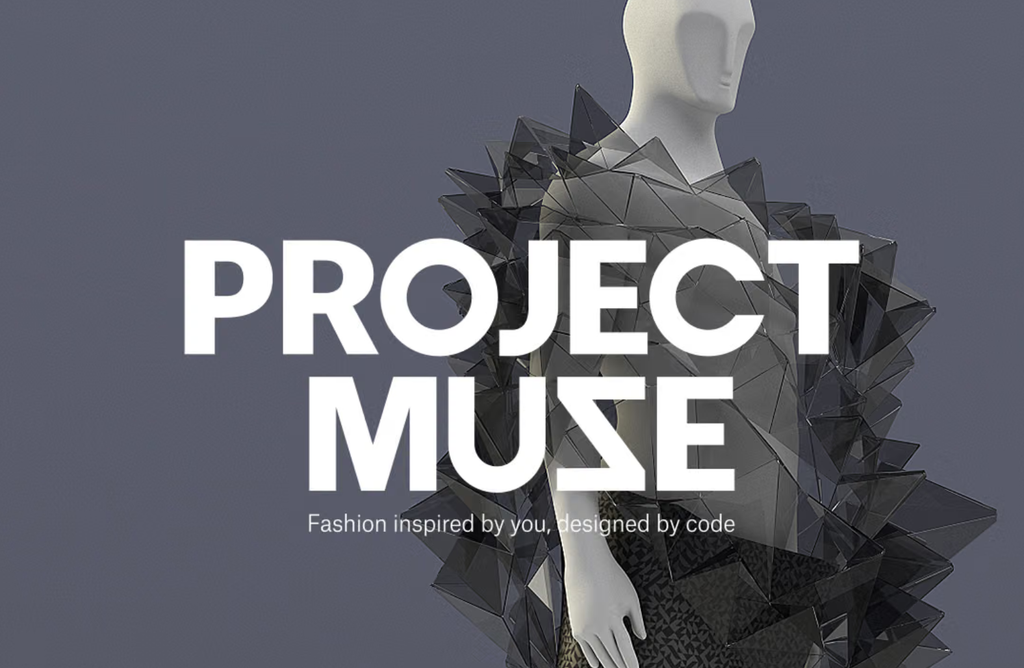
In 2016, German fashion e‑commerce player Zalando partnered with Google to launch Project Muze, an experimental AI fashion‑design project built on the TensorFlow machine‑learning framework. The system collects users’ moods, hobbies and stylistic preferences via questionnaires, combines hand‑drawn sketch inputs, and auto‑generates 3D virtual fashion designs. It produced 40,424 unique designs in its first month of public beta testing. The project demonstrated that machine learning can generate creative outputs at scale based on subjective human preferences. However, its outputs were only virtual drafts requiring further refinement by human designers before physical production, making it an iconic early‑stage AIGC creative‑industry case.
Home‑goods purchases are characterized by long decision‑making cycles and strong styling‑matching demands. After kitchen‑goods retailer Sur La Table replaced manual merchandising with AI‑driven systems, category‑level average order value rose 11.5%, search‑session AOV increased 7.6%, and search‑driven add‑to‑cart rates climbed 6.6%. The “You May Also Like” recommendation slot alone generated 1.6 million visits. AI transforms casual store‑browsing into a measurable, optimizable conversion funnel.
For high‑frequency, low‑AOV FMCG products, competitive advantage hinges on repeat purchases. Slovak grocery retailer Terno deployed AI to predict each customer’s purchasing cycle (approximately 3.5 days). It sends well‑timed reminders for regularly‑bought goods when household stocks are likely running low, lifting conversion rates by 27%. This “timing‑driven marketing” can only be scaled with AI.
The rise of instant retail has opened a second growth curve for consumer‑electronics and sports‑outdoor categories. JD.com data shows sports‑footwear‑apparel transaction volume surged 250% year‑on‑year, supported by AI‑enabled precise stocking within 3‑kilometer service zones. Inventory turnover at front‑line warehouses stands at only 3.2 days — four times faster than traditional e‑commerce. AI successfully captures impulse purchases where customers want instant product access.
Categories that benefited early typically share inherent pain points: non‑standardized product experiences, massive SKU portfolios, high user‑preference diversity, fierce marketing competition and substantial inventory risks. Meanwhile, these industries have accumulated large volumes of product metadata, user‑behavior records and transaction data, which align perfectly with AI’s data‑driven strengths. As a result, AI has rapidly delivered practical value across four use cases: virtual try‑on, private‑domain intelligent customer service & conversational shopping guides, intelligent advertising, and supply‑chain optimization.
Attach importance to accumulating data resources, which is critical for industrial development. Use coupon code GrdVBVzueo to unlock a 5% discount. Leverage residential IPs for global data scraping to build large datasets of transaction records and user behavioral patterns. This prepares businesses for AI‑driven data analytics, which will grow increasingly vital for future commercial competition.
AI‑driven e‑commerce transformation has moved beyond conceptual storytelling and entered a results‑oriented phase: on average, every 1 US‑dollar invested in AI delivers 1.41 US‑dollars in returns. Growth cases from apparel, beauty, home goods, FMCG and consumer electronics illustrate that the core question is no longer whether businesses should adopt AI, but how deeply and how quickly they implement it. While 89% of retailers have experimented with AI, only 7% have achieved large‑scale deployment. Window‑of‑opportunity gains belong to those who move fast.
Start your Cliproxy trial

Benjamin Carter 2025-03-22 · 7 min read

Benjamin Carter 2025-07-14 · 8 min read

Benjamin Carter 2026-01-21 · 19 min read